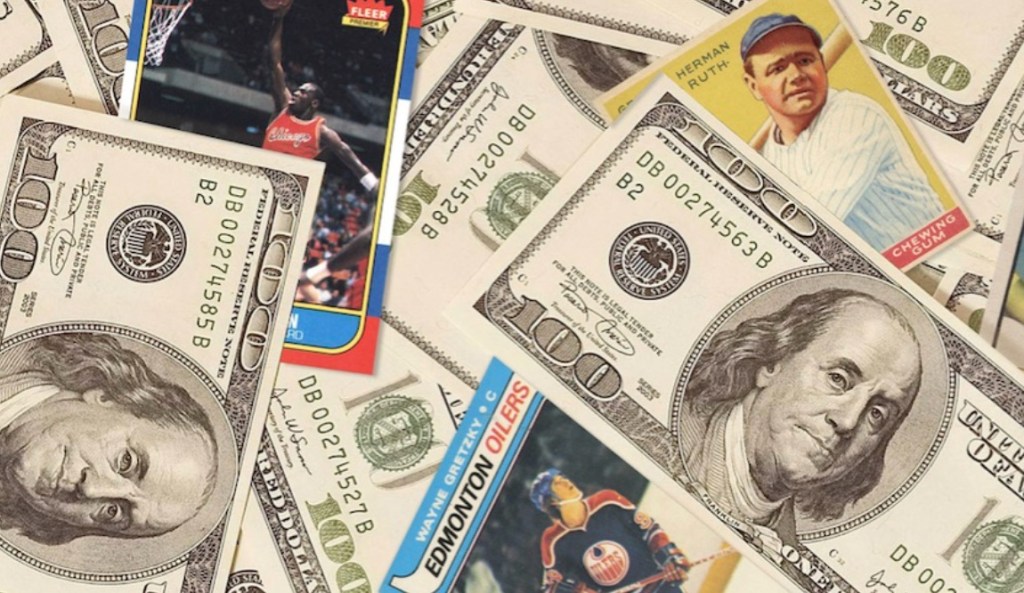
How to Know if Your Sports Cards Are Worth Money
Sports cards have been a cultural phenomenon for decades, spanning generations of dedicated sports fans. Whether you are a new collector or have recently dusted off your childhood collection, you are likely wondering: “How can I find out what these are worth?” This article will give you a breakdown of what platforms to use in order to determine an accurate value for your collection.
How to Determine the Value of a Sports Card?
Although you often hear about the booming sports card market on the news and see million-dollar deals all over your social media, sports cards do not have any inherent value. Just like anything, a sports card is only worth what someone is willing to pay. A customer’s willingness to pay can change based on a variety of factors, some of which are performance-based and others of which are based on the state of the market itself. So how can we go about determining an accurate value for our sports cards? The following platforms are best equipped to help you understand the true current value of your sports cards:
eBay Sold Filter
Using eBay to determine the current asking price for a sports card is one of the most reliable ways to determine the true asking price for your card. By searching for your card by name and filtering for only “Sold” items, you can see exactly what a real customer actually paid for that card and when that purchase was made. This helps you understand what you could realistically expect to receive for your card. This also shows you the frequency/demand for any specific card. If you notice there are sales of this particular card daily, then the card is in high demand and will likely sell very quickly, whereas some cards may only sell once a month, in which case you will have a harder time finding a buyer.

MarketMovers App
The MarketMovers App is another great tool for determining the value of your sports cards. Unlike eBay, which only shows you individual sales, MarketMovers compiles data from thousands of transactions to give you a clear picture of overall price trends. By tracking the historical sales data of a card, you can see whether its value is rising, falling, or staying consistent over time. This makes it especially useful if you are considering holding onto a card as a long-term investment, or if you want to time your sale for when demand is at its peak.

PSA Population Reports
Grading can drastically impact the value of a sports card, and PSA is one of the most trusted grading companies in the hobby. By looking up a card in PSA’s population reports, you can see how many copies exist in each grade. Generally, the rarer a high-grade version of a card is, the more valuable it becomes. For example, a card graded PSA 10 (Gem Mint) will often sell for multiples of what the same card might fetch ungraded. Checking population reports can help you understand both rarity and market demand for graded versions of your cards.
Card Ladder
Card Ladder is another platform that helps collectors monitor card values. Similar to MarketMovers, it tracks sales data from multiple marketplaces and provides detailed charts on pricing trends. One of its most useful features is the “Ladder Index,” which gives you a big-picture look at the sports card market as a whole. If you’re serious about understanding how the hobby is moving, Card Ladder can give you valuable insight into whether it’s a buyer’s or seller’s market.
Key Factors That Influence Card Value
While platforms and tools give you the numbers, it’s equally important to understand why a card might be worth more or less at any given time. Here are the main factors:
- Player Performance: If a player is performing at an elite level or gaining major attention, their cards tend to spike in value. Conversely, injuries or poor play can cause prices to dip quickly.
- Rarity: Limited print runs, serial-numbered cards, or short prints generally hold higher value due to scarcity.
- Condition: Even small flaws such as centering, surface scratches, or corner wear can greatly affect what someone is willing to pay. Grading helps standardize this, but condition matters whether a card is graded or raw.
- Historical Significance: Rookie cards, cards tied to a major sports moment, or iconic sets often hold long-term value regardless of short-term market swings.
Final Thoughts
Determining the value of your sports cards takes a mix of research, awareness, and the right tools. Platforms like eBay, MarketMovers, PSA, and Card Ladder can give you the most accurate picture of what your cards are actually worth. Combine this data with an understanding of player performance, rarity, and condition, and you’ll have everything you need to make smart decisions about when to hold, sell, or invest in your collection.
Frequently Asked Questions About Sports Card Value
How do I find out if my sports cards are valuable?
The easiest way to find out if your sports cards are worth money is by checking recent sales on eBay using the “Sold” filter. This shows you exactly what buyers have paid for the same card. You can also use tools like MarketMovers or Card Ladder to track price trends over time.
Is it worth getting my sports cards graded?
If your card is in excellent condition, getting it graded by PSA, BGS, or SGC can increase its value significantly. A PSA 10, for example, will often sell for multiples of the same card ungraded. However, grading costs money, so it’s best reserved for cards that are already in high demand or potentially worth more than the grading fee.
What is the best website to check sports card values?
eBay is the most reliable place to check real-world sales data. For more in-depth insights, apps like MarketMovers and Card Ladder provide pricing charts, trends, and historical data to help you understand long-term value.
Do old sports cards always have value?
Not necessarily. While some vintage cards from legends like Mickey Mantle or Michael Jordan can be worth thousands, many old cards were mass-produced and hold little value today. The card’s condition, rarity, and player significance all play a bigger role than age alone.
What factors make a sports card valuable?
The main factors that affect sports card value are player performance, rarity, condition, and market demand. Rookie cards, low-numbered parallels, and well-graded cards tend to hold the highest value.
Where can I sell my sports cards once I know their value?
Most collectors start with eBay because it has the largest audience of buyers. You can also sell through local card shops, Facebook groups, sports card shows, or consignment with trusted marketplaces like PWCC or Goldin Auctions. For a complete guide on how to sell your sports cards, check out “How to Sell Sports Cards”.
 Paradise Collect: Canada's Sports Card Home
Leave a comment